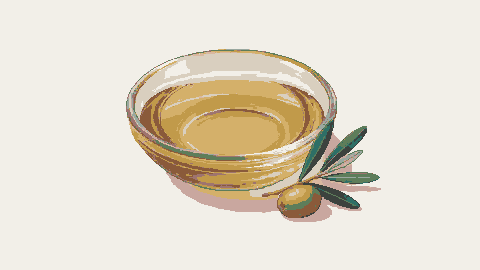
What squalane is
Squalane is a saturated hydrocarbon oil: a lightweight, odourless, nearly colourless liquid that spreads like a very light oil and absorbs quickly. It is prized in formulation because it feels like skin's own sebum without behaving like it.
Its parent molecule, squalene, is a natural component of human skin surface lipids. Sebaceous glands produce it as part of the lipid mix that coats the skin, and it makes up a meaningful share of that surface oil.PMC Squalane is made by hydrogenating squalene: saturating the molecule so it no longer oxidises.
That last part is the whole reason squalane exists as an ingredient. Squalene itself goes rancid quickly and can actually contribute to skin problems as it oxidises. Squalane keeps the skin-like feel and drops the instability.
Squalane versus squalene: one letter matters
The names differ by a single letter and people mix them constantly, including on ingredient lists. The rule of thumb: squalene with an E is the natural, unstable version found in skin sebum and plant oils. Squalane with an A is the hydrogenated, shelf-stable version used in cosmetics.
If a product claims to contain squalene and you want it to still be good in six months, either the label is wrong or the formulation is ambitious. Cosmetic-grade versions are almost always squalane.
Where squalane comes from
Historically, most cosmetic squalane came from shark liver oil, which is as grim as it sounds and drove demand for alternatives. Today the dominant sources are olive oil and sugarcane. Olive-derived squalane is recovered from the unsaponifiable fraction of olive oil; newer green chemistry routes recover squalene from olive pomace, a processing byproduct, before hydrogenating it to squalane.PubMed
Sugarcane-derived squalane, produced by fermentation, has grown as a consistent, scalable source. Either way, modern cosmetic squalane is plant-derived and does not require a shark. If a brand cannot say where theirs comes from, that is worth a raised eyebrow.
What the research actually supports
Squalane's best-documented role is as an emollient and carrier. It softens and smooths the skin surface, reduces friction, and helps other ingredients spread and penetrate evenly. Formulation research has explored it as a carrier for lipophilic actives like vitamin E in emulsion systems.PubMed
Laboratory work suggests more: a 2025 study on human dermal fibroblasts found that squalane at low concentrations counteracted UVA-induced oxidative stress and supported collagen biosynthesis markers.PubMed That is cell-level evidence, not proof that squalane repairs skin in a bathroom mirror, but it is a reasonable basis for its reputation as a gentle, well-behaved oil.
What the evidence does not support is the idea that squalane is a treatment for any condition. It is a well-tolerated emollient with a sensible rationale, which is what a cosmetic ingredient should be.
Comedogenicity and feel
Squalane has a well-earned reputation as one of the least congesting oils available. It is frequently recommended for oily and combination skin precisely because it disappears into skin quickly and does not leave the occlusive film that heavier oils do.
The honest caveat is the same one we give everywhere: comedogenicity ratings are folklore-adjacent, individual variation is real, and no oil is guaranteed non-comedogenic for every face. But if you are shopping for the least likely to congest, squalane is near the top of the sensible shortlist.
Why it is in Extra Sensitive
Extra Sensitive had to feel like a proper balm without coconut oil or beeswax doing the work. Squalane provides the slip: that initial glide that makes the balm spread instead of drag. Because it is chemically stable, it also helps the formula stay consistent without needing added fragrance or masking.
It sits alongside babassu oil for lauric emollience and candelilla wax for structure. The result, Extra Sensitive, is built for skin that reacts to the usual suspects.
How to use a squalane-containing product
Squalane works as a finishing emollient: apply to slightly damp skin to seal in water, or as the last step in a routine. In a balm like ours it arrives already blended with butters and oils, so you apply the balm as normal. There is no special technique, and it layers cleanly under sunscreen and makeup.
Squalane in the wider emollient family
Emollients are the ingredients that soften and smooth skin by filling the microscopic gaps between surface cells. They range from heavy occlusives like petrolatum to midweight plant butters like shea to featherlight oils like squalane. A good formula layers them: occlusives slow water loss, butters add cushion, light oils add glide.
Squalane occupies the light end of that spectrum alongside jojoba, which is technically a liquid wax ester. Both are prized for feeling like skin rather than sitting on it. If shea is the duvet of the emollient world, squalane is the cotton sheet: less substance, but the part you actually feel.
Squalane and the skin barrier
Because squalene is a natural sebum component, squalane sits comfortably in the skin-identical family of ingredients alongside ceramides and cholesterol. These are lipids the skin already recognises, which is part of why they tend to be tolerated even by skin that objects to stranger molecules.
It is worth being precise about the claim though. Skin-identical does not mean squalane rebuilds the barrier the way ceramide research describes for that lipid class. Its barrier contribution is simpler and still useful: it softens the surface, reduces water loss modestly, and does so with a very low irritation profile. Our sensitive skin guide covers the lipid layer in more depth.
FAQs
Question
Is squalane good for sensitive skin?
Answer
It is one of the best-tolerated oils in cosmetics, which is why it is in our gentlest formula. Stable, odourless and non-reactive describes almost everything a sensitive-skin customer wants. Individual variation still applies, so patch test like anything new.
Question
Is squalane vegan?
Answer
Modern cosmetic squalane is almost always plant-derived, typically from olives or sugarcane. The ingredient itself is vegan-friendly. Whether a finished product is vegan depends on everything else in the formula.
Question
Can I use squalane if I have oily or acne-prone skin?
Answer
It is one of the most frequently recommended oils for oily skin because it is light and fast-absorbing. Whether your skin agrees is individual, so trial a small amount rather than trusting any universal claim.
Question
Does squalane expire?
Answer
It is far more stable than its parent squalene and most plant oils, which is the point of hydrogenating it. In a finished product it contributes to shelf stability rather than shortening it.
Question
Squalane vs hyaluronic acid: which is better?
Answer
They do different jobs. Hyaluronic acid is a humectant that binds water; squalane is an emollient that softens and helps retain it. Most routines benefit from both, and a balm containing squalane pairs naturally with a hydrating step underneath.
Question
Is squalane the same as olive oil?
Answer
No. Olive-derived squalane is extracted from the small unsaponifiable fraction of olive oil or pomace, then purified and hydrogenated. It shares a source with olive oil but is a single isolated lipid, not the whole oil.
Question
Why does squalane feel lighter than other oils?
Answer
Its molecular structure is a straight, saturated hydrocarbon chain, which spreads easily and does not form the heavier films that triglyceride oils do. That structure is also what makes it stable: there are no double bonds left for oxygen to attack.
Question
Can squalane go under makeup?
Answer
Yes, and it is one of the better oils for it because it absorbs fast and does not pill under most bases. In a balm format like ours you would give it a minute to settle before applying anything on top.
Question
How much squalane is in a typical formula?
Answer
Anywhere from a trace supporting role to a large share of the oil phase, depending on the product type. In a balm it works as a glide agent inside a richer blend rather than the whole story.
References
Sebaceous gland lipids and skin surface composition
Review of sebaceous gland biology and skin surface lipid composition, including squalene in human sebum.PMCSqualane and UVA-induced oxidative stress (2025)
Human dermal fibroblast study: squalane counteracted UVA-induced oxidative stress and supported collagen markers at low concentrations.PubMedSqualane as a carrier for vitamin E (2025)
Formulation research on squalane as a biocompatible carrier enhancing vitamin E stability and permeation in emulsions.PubMedGreen chemistry squalane from olive pomace (2025)
Sustainable route: recovering squalene from olive pomace and hydrogenating to cosmetic squalane.PubMedSqualane ingredient profile
INCIDecoder reference on squalane: properties, function and cosmetic use.incidecoder.com