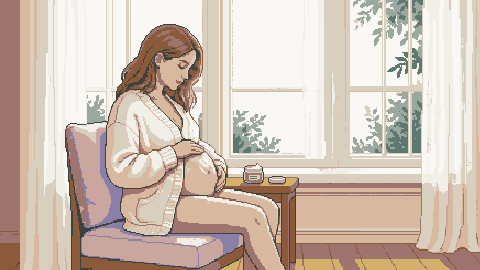
How skin changes in pregnancy
Pregnancy hormones shift the skin's behaviour in both directions: some people get the famous glow, others get dryness, sensitivity or breakouts they have never had before. The bump stretches skin faster than it can comfortably adapt, which is why the stomach, hips and breasts commonly feel tight and itchy as pregnancy progresses.
Most of this is ordinary. NHS guidance describes itchy skin in pregnancy as common, affecting around one in five pregnancies, usually on the bump and often worse at night.nhs.uk A good moisturising routine is the standard comfort measure for ordinary pregnancy dryness.
What to avoid and what simplifies the list
Pregnancy is the one time the ingredient list genuinely earns scrutiny. NHS and midwifery guidance generally suggests avoiding high-concentration actives such as retinoids entirely, and being cautious with essential oils, particularly in the first trimester.nhs.uk This is where a very short, recognisable ingredient list stops being a preference and becomes practical: nine ingredients, none synthetic, makes checking what you are putting on your skin a ten-second job.
Within our own range the honest steer is the Original: it contains no essential oils or fragrance at all. The scented variants use low levels of essential oils many people continue comfortably through pregnancy, but if you want zero doubt, the unscented jar is the pick.
A bump and body routine
A pregnancy skincare routine can be mercifully short: a gentle wash, a rich cream on damp skin morning and evening, and particular attention to the bump, hips, breasts and anywhere skin feels tight. Keeping skin well moisturised is the classic comfort advice for stretched, itchy skin; it will not change whether stretch marks appear (largely genetics and rate of growth, per NHS guidance), but comfortable skin is worth having for its own sake.nhs.uk
Nipples and the nappy-change bag get a mention too: a simple, unscented balm is the traditional companion for sore nipples while breastfeeding and for baby skin later, which is why our Mum & Baby Duo exists. Patch-test anything new on a small area first, because pregnancy can sensitize skin that never reacted before.
Itching that needs the midwife, not the cream
One specific warning worth knowing: widespread itching, especially on the palms of the hands and soles of the feet and worse at night, can be a sign of obstetric cholestasis, a liver condition that needs assessment. It is uncommon, but NHS guidance is clear that itching without a rash in pregnancy should be mentioned to your midwife or GP, particularly in the third trimester.nhs.uk Ordinary bump itchiness settles with moisturiser; the warning sign is itching that does not.
FAQs
Question
Is tallow cream suitable during pregnancy?
Answer
A simple, fragrance-free tallow cream is a reasonable everyday moisturiser in pregnancy: short ingredient list, no retinoids, nothing synthetic. Patch-test first, since skin can react to products it tolerated before, and take extra care with anything containing essential oils, particularly in the first trimester. Our Original is the zero-essential-oil option.
Question
Will moisturising prevent stretch marks?
Answer
Honestly, no cream can promise that. NHS guidance notes stretch marks are largely down to genetics and how quickly skin stretches; creams may help skin feel more comfortable as it stretches, but they do not reliably prevent marks, and most fade considerably after birth. We would rather tell you that than sell you a promise.nhs.uk
Question
What should I do about itchy skin?
Answer
For ordinary bump dryness, a rich fragrance-free cream morning and evening is the standard comfort measure. But mention any itching to your midwife, and contact them promptly for itching without a rash, especially on palms and soles or worse at night: it can rarely indicate obstetric cholestasis, which needs checking.nhs.uk
Question
Which skincare ingredients should I avoid in pregnancy?
Answer
Retinoids are the headline avoid, and caution is advised around high-dose salicylic acid and essential oils, especially early on. NHS pregnancy guidance is the reference point, and your midwife can clarify anything specific. The simplest workaround is a very short ingredient list with no actives or essential oils at all.nhs.uk
References
NHS: itching in pregnancy
NHS. Itching and intrahepatic cholestasis of pregnancy: symptoms and when to seek help.nhs.ukNHS: stretch marks
NHS. Stretch marks in pregnancy: causes and what creams can and cannot do.nhs.ukNHS: skincare in pregnancy
NHS. Keeping well in pregnancy: skincare guidance.nhs.ukNHS: dry skin
NHS. Dry skin: causes and self-care.nhs.uk