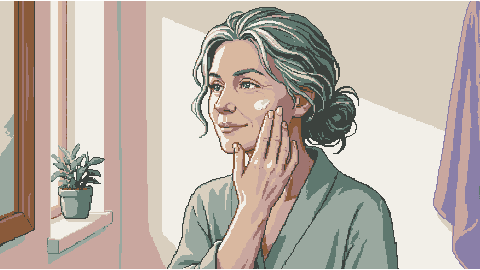
What happens to skin during menopause
Falling oestrogen does several things to skin at once. Oestrogen supports collagen production and helps the skin barrier hold onto lipids and water, so as levels decline through perimenopause the skin gradually loses some of its ability to stay hydrated and cushioned. The outer layer holds less water, natural oil production drops, and skin that was comfortable for decades can start feeling dry, tight or itchy.
The scale is larger than most people expect. In a survey of over a thousand perimenopausal and menopausal women run by a UK menopause clinic, around 64 percent reported dry skin and 56 percent reported itchy skin.drlouisenewson.co.uk The National Eczema Society publishes a dedicated factsheet on menopause and skin, noting that dryness and itching are among the most common skin complaints of the transition.eczema.org.uk
Why your old moisturiser seems to stop working
A common experience: the moisturiser that worked for years suddenly feels like it does nothing. The product probably has not changed; the skin has. As the barrier's lipid content shifts, water escapes faster, so a light lotion that once held the line all day now only manages an hour or two. It is less that the cream stopped working and more that the job got harder.
The practical response is usually not a new active or a complicated routine, but a step up in richness: swapping a light lotion for a cream or balm with proper occlusive ingredients that slow water loss for longer. This is why menopause skin guidance tends to recommend richer, greasier emollients over light products, and applying them to damp skin to capture the moisture that is already there.
The ingredient approach
What menopause skin needs is what most dry skin needs, only more consistently: emollients to soften, and occlusives to hold water in. A few notes specific to this stage:
- Rich occlusives earn their place. Butters, waxes and tallow-based creams sit on the surface longer and keep working for hours, which suits skin that now loses water quickly. Our whipped tallow creams were built for exactly this kind of skin, and the richer lavender night face cream is the usual pick for faces.
- Fragrance deserves a second look. Skin can become more reactive during the transition, and fragrance is the most common cosmetic allergen. If skin feels newly sensitive, an unscented or essential-oil-free cream removes one variable. Our Original and Extra Sensitive jars contain no fragrance or essential oils at all.
- Simpler is often better. A short, recognisable ingredient list makes it easier to spot what agrees with changing skin and what does not.
A routine that keeps up
Patient-facing guidance for menopause skin converges on a short routine: gentle cleansing rather than foaming washes, a rich moisturiser applied to damp skin morning and evening, and particular attention to the areas that dry first (face, neck, hands and shins). Overnight is where a rich balm earns its keep: applied generously at bedtime it works undisturbed for eight hours. SPF during the day still matters, because declining oestrogen also affects how skin handles UV over time.
When itching is not just dry skin
Most menopausal itchiness is dryness, but some itching deserves a GP or menopause specialist rather than a cream. Worth an appointment: itching that is severe, widespread or accompanied by a rash; skin that is crawling or tingling in ways moisturisers do not touch; persistent hives; or dryness and itching so disruptive it affects sleep. Menopause also raises the stakes for skin checks generally, so anything new or changing is worth mentioning. A GP can also discuss whether symptoms point to treatment options beyond skincare, which is a conversation no cream belongs in.
FAQs
Question
Is dry, itchy skin really a menopause symptom?
Answer
Yes, and a common one. Surveys suggest around two thirds of perimenopausal and menopausal women experience drier skin and over half experience itching, driven largely by falling oestrogen's effect on the skin barrier and its lipids. It is one of the less talked about symptoms but one of the better evidenced.drlouisenewson.co.uk
Question
What kind of moisturiser works best for menopause skin?
Answer
Richer beats lighter: creams and balms with proper occlusive ingredients hold water in far longer than lotions. Apply to damp skin, and expect night-time to do the heaviest work. If skin has become reactive as well as dry, a short, fragrance-free ingredient list removes the most common irritant.
Question
Does menopause skin need different products for face and body?
Answer
Not necessarily, but the face often wants something richer than before with as little fragrance as possible, which is what a dedicated night cream provides. Body skin, especially shins and hands, usually wants the richest product you will actually use daily.
Question
Can a cream help with menopause itching?
Answer
For ordinary dryness-related itching, keeping skin well moisturised is the standard first step and helps most people. Persistent, severe or rash-accompanied itching is a different matter: a cream is a cosmetic, not a treatment, and that level of itch warrants a GP or menopause specialist conversation.
References
Newson Health: skin changes survey
Newson Health. Skin changes during perimenopause and menopause: survey findings and guidance.drlouisenewson.co.ukNational Eczema Society: menopause and eczema
National Eczema Society. Menopause and eczema factsheet.eczema.org.ukNHS: menopause
NHS. Menopause: symptoms and support.nhs.ukNHS: itchy skin
NHS. Itchy skin: causes and self-care.nhs.ukNHS: dry skin
NHS. Dry skin: causes and self-care.nhs.uk