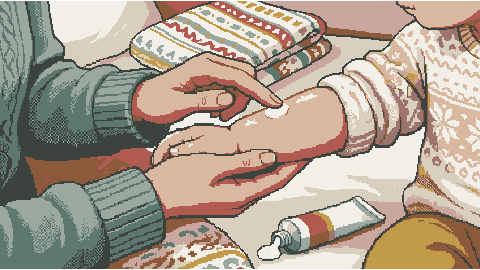
What eczema-prone skin is
Atopic eczema is one of the most common skin conditions in the UK. The NHS describes it as skin that is dry, itchy and cracked, driven partly by a skin barrier that holds less water and lets irritants in more easily than unaffected skin.nhs.uk
If your skin flares in cycles, reacts to fragranced products, or feels tight and rough within minutes of washing, you are likely dealing with the same underlying issue: a barrier under strain. Day-to-day care is about reducing water loss and removing triggers, not finding something that fixes the condition itself.
That distinction matters for how you read product labels. Moisturisers are cosmetics: they soften, smooth and help keep skin hydrated. Managing eczema itself belongs with your pharmacist or GP, especially when skin is broken, weeping or spreading.
Ingredients studied for eczema-prone skin
No cosmetic ingredient treats eczema. What the research does show is which ingredients have been studied on eczema-prone and very dry skin, and what they found. A few with published evidence behind them:
Emollients as a class
NHS guidance describes emollients, meaning moisturisers that soften and smooth, as a mainstay of eczema management: used little and often, they reduce water loss and calm the itch-scratch cycle.nhs.uk
Coconut oil
In children with mild to moderate atopic dermatitis, an 8-week randomised trial found virgin coconut oil produced greater reductions in severity scores and better hydration than mineral oil. A separate study reported reduced Staphylococcus aureus colonisation on atopic skin after four weeks of use.WileyPubMed More on coconut oil.
Shea butter
In a paediatric eczema study, a cream containing shea butter extract performed comparably to a ceramide-precursor product, and plant-oil reviews describe shea's unsaponifiable fraction as the likely basis for its barrier-comforting behaviour.PubMedPMC More on shea butter.
Zinc oxide barrier creams
For the nappy area specifically, NHS guidance recommends barrier creams containing zinc oxide to shield skin from wetness and friction, with a pharmacist or GP visit if things are not improving.nhs.uk More on zinc oxide.
Plant oils generally
A widely cited dermatology review of topical plant oils found several, including sunflower, coconut and jojoba, show barrier-supporting and anti-inflammatory signals in laboratory and clinical work, while cautioning that evidence quality varies and some oils can be disruptive.PMC
What to avoid
The pattern across guidance is consistent: the biggest wins often come from removing irritants, not adding actives.
Fragrance during flares
Fragrance is one of the most common contact sensitivities on compromised skin. EU rules require individual fragrance allergens to be named on labels precisely so sensitised users can avoid them.EUR-Lex Practical rule: during a flare, pick fragrance-free. Our own Lavender and Rose Geranium creams are scented with real essential oils for skin that is settled; our Extra Sensitive formula is the gentlest fragrance-free pick while skin is reactive.
Harsh surfactants and long hot washes
Sulphate-heavy washes and hot water strip lipids faster than dry skin can replace them. Lukewarm water, short showers and soap-free cleansers are the standard advice.
Anything that stings on broken skin
If a leave-on product stings on contact, that skin is telling you something. Patch-test on a small area of unbroken skin first, and park anything that burns.
A simple daily routine
Complexity is the enemy of consistency. The routine most often suggested in eczema care guidance is boring on purpose:
- Morning: rinse with lukewarm water, apply moisturiser while skin is still slightly damp.
- Through the day: re-apply to any area that feels tight or itchy, especially hands after washing.
- Evening: a thicker layer on the driest patches before bed.
Three minutes twice a day beats an elaborate routine you abandon by Thursday.
Conventional emollients and simple-ingredient balms
Pharmacy emollients like E45 and paraffin-based ointments are cheap, well-studied and the first thing most GPs suggest. They are also mineral-oil based, which some people find greasy or prefer to avoid for other reasons.
Simple-ingredient balms built on tallow, shea and beeswax sit in the same functional family: occlusive-emollient products that slow water loss and soften skin. They are not interchangeable with prescribed treatment, and if your GP has recommended a specific emollient, use it. Where a natural balm earns its place is alongside prescribed care, as a cosmetic moisturiser you are happy to reach for several times a day.
Honest trade-offs both ways: pharmacy emollients are cheaper per gram and carry more clinical history; simple balms tend to feel richer, smell gentler or nothing at all, and keep the ingredient list short enough to actually read.
When to see a GP or pharmacist
Self-care has limits. NHS guidance is to speak to a pharmacist or GP when skin is not improving despite regular moisturising, when it is broken, weeping, crusted or spreading, when itch is disturbing sleep, or when a child's skin is involved and you are unsure.nhs.uk
Flares that do not settle may need prescription treatment, allergy investigation, or simply a better-suited emollient. None of that is a failure of your routine.
Reading moisturiser labels
Ingredients lists are ordered by weight, so the first five or six entries are effectively the product. For eczema-prone skin that first block should read like an emollient recipe: fats, butters and waxes you recognise, not a paragraph of solvents and actives.
Two label habits help. First, scan for the individually named fragrance allergens, limonene, linalool, geraniol and friends. Their presence means the product contains fragrance, whatever the front of the pack says.EUR-Lex Second, treat 'dermatologically tested' as decoration: it is not a regulated standard, just a phrase describing that some testing happened somewhere. Short lists you can actually read are worth more than reassuring badges.
A note on steroid creams and alternatives
Searches for natural alternatives to steroid creams are common, and it is worth being straight about where cosmetics sit. Topical steroids are prescribed treatments for inflammation; emollients and balms are cosmetics that keep skin comfortable and reduce water loss. They are not the same category, and treating them as interchangeable is how flares go undertreated.
NHS guidance positions emollients as baseline care alongside prescribed treatment, not instead of it.nhs.uk If steroid use worries you, that conversation belongs with your GP, who can discuss potency, quantity and alternatives properly. What a good emollient routine can do, and what the evidence supports, is keep the skin between flares more comfortable.
FAQs
Question
Is tallow good for eczema-prone skin?
Answer
Published evidence on tallow itself is early-stage: a scoping review describes its lipid profile as compatible with skin and notes a long history of cosmetic use, but large eczema-specific trials do not exist yet.PubMed What we can say is narrower: tallow is a rich emollient, our creams containing it are cosmetics not treatments, and for active eczema your clinician's recommendation comes first.
Question
Fragrance-free vs unscented: what is the difference?
Answer
Fragrance-free means no fragrance ingredients were added at all. Unscented can mean masking fragrance was used to hide the product's natural smell. For reactive skin, fragrance-free is the safer label to look for.
Question
Can I use it on my baby?
Answer
Our Extra Sensitive cream is fragrance-free and made to be gentle enough for newborns, and parents do use it on babies' dry skin. For nappy-area rashes, NHS guidance recommends zinc-containing barrier creams. If your baby's skin is weeping, spreading or not improving, see your health visitor or GP first.
Question
How often should I moisturise?
Answer
NHS guidance for eczema-prone skin is little and often rather than a thick layer once a day: at least twice daily, plus after washing hands or bathing, and any time skin feels tight or itchy.nhs.uk
Question
Should I moisturise during a flare?
Answer
NHS emollient guidance does not pause during flares: regular emollient use is part of baseline care alongside whatever your clinician prescribes for the flare itself.nhs.uk If a product stings on broken skin, park it and ask your pharmacist for the blandest option in the meantime.
Question
Is eczema contagious?
Answer
No. Eczema is not an infection and cannot be passed between people. It runs in families with asthma and hay fever because it is driven by inherited barrier differences, not by anything transmissible.nhs.uk
References
NHS: atopic eczema overview, causes and emollient guidance
NHS. Atopic eczema: symptoms, causes, emollients and when to seek help.nhs.ukVirgin coconut oil in childhood atopic dermatitis (RCT)
Evangelista MTP et al., 2014. Randomised double-blind trial: virgin coconut oil vs mineral oil in mild-moderate paediatric atopic dermatitis.WileyCoconut oil and S. aureus on atopic skin
Verallo-Rowell VM et al., 2008. Coconut oil reduced S. aureus colonisation and eczema severity vs olive oil.PubMedShea butter extract cream in paediatric eczema
Topical plant oils review
Lin TK et al., 2017. Anti-Inflammatory and Skin Barrier Repair Effects of Topical Application of Some Plant Oils.PMCNHS: nappy rash and barrier creams
NHS. Nappy rash: prevention, zinc-oxide barrier creams and when to seek advice.nhs.ukTallow scoping review
Tallow, rendered animal fat and its biocompatibility with skin: a scoping review.PubMedEU fragrance allergen labelling
EUR-Lex. Regulation 2023/1545: fragrance allergens requiring individual labelling on cosmetics.EUR-Lex